Calculate home loan repayments with our Home Loan Repayment Calculator. View detailed amortization charts, compare loan terms, and plan your mortgage with confidence.
Calculator results are estimates only and not quotes. Actual quotes will be provided by licensed brokers after you submit an enquiry.
Home Loan Details:
Important!
Home Loan Interest Rates differ from lender to lender and will depend on your individual circumstances (credit history, employment status, age, etc.). To find out if you qualify ... and for a free, personalised interest rate and repayment quote,
please CLICK HERE
Home Loan Amortisation Calculator
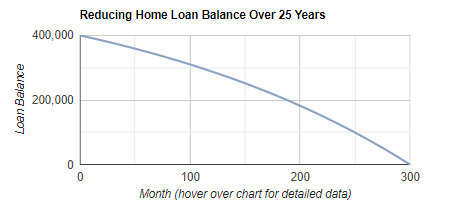
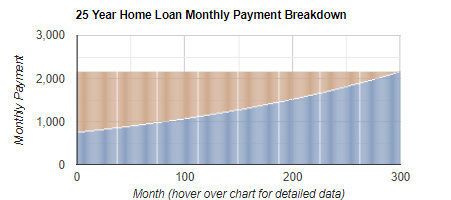
The following amortisation graphs detail month-by-month data on the progress of the proposed loan. The first chart below examines the reducing loan balance over the course of the finance contract term. The second graph illustrates the portion of each monthly repayment allocated to payment of interest vs principal reduction.
How to use our Home Loan Repayment Calculator
Our Home Loan Repayment Calculator helps you estimate your mortgage repayments in Australia and understand how a loan may reduce over time. It is useful for budgeting, comparing loan terms, and visualising an amortisation schedule (how each repayment is split between interest and principal). The calculator is designed for planning only and works best when you enter realistic assumptions.
Important information: Results are estimates only and do not constitute a quote. Interest rates and loan features vary by lender and may change. This information is general and does not take into account your objectives, financial situation or needs. Consider whether it is appropriate for you and seek professional advice if required.
How to complete the calculator fields (in order):
1. Purchase Price: Enter the property purchase price. If you expect to borrow extra for costs, you may choose to include amounts such as stamp duty, insurance, and other buying costs in this figure so your estimate reflects your likely loan size. Enter whole numbers only (no dots or commas).
2. Deposit or Equity Value: Enter your cash deposit or usable equity from another property (if applicable). A higher deposit generally reduces the loan amount and can lower repayments. Enter whole numbers only (no dots or commas).
3. Term of Loan (years): Select the number of years to repay the loan. Longer terms usually reduce repayments but increase total interest paid over the life of the loan.
4. Interest Rate (% per annum): Select an interest rate for the simulation. Use a realistic rate and consider testing higher rates to understand “rate rise” risk.
5. Calculate: Click calculate to generate your results.
How to interpret the results:
1. Repayment estimate: Use this as a starting point for affordability checks, remembering real loans may include fees and different features.
2. Amortisation charts: Review the loan balance chart to see how your balance falls over time, and the interest versus principal chart to understand how early repayments are typically interest-heavy, then shift toward principal reduction later.
3. Compare scenarios: Adjust the term, deposit/equity, or interest rate and recalculate to compare loan terms and see how changes affect repayments and total interest over time.
Choosing the right loan can be a pivotal decision in your personal financial journey. In Australia, where a diverse range of loan options is available, selecting the loan that aligns perfectly with your needs is more crucial than ever. A judicious choice can help you fulfill your dreams—be it buying a new home, investing in education, or consolidating debt—while ensuring that the repayments remain manageable and do not lead to financial strain. - read more
Loan approval can often be a crucial milestone in achieving your financial goals. Whether you're looking to buy a home, pay for education, or consolidate debt, securing a loan can provide the financial boost you need to move forward. - read more
Being declined for a loan because of your credit score can be frustrating, but it can also give you useful information. By reviewing the reason for the decision, checking your credit report and improving the factors lenders assess, you can be better prepared before considering another application. - read more
Understanding the nuances of financial health is a crucial component in the journey of loan acquisition. It is the bedrock on which potential borrowers build their case for credibility and reliability. Among the myriad of factors influencing your fiscal stability, credit scores stand out as a beacon indicating your creditworthiness to lenders. A robust credit score simplifies the path to securing loans, garnering favorable interest rates, and negotiating better terms. - read more
A clear budget can help you understand where your money goes, plan loan and credit card repayments, and reduce the risk of taking on more debt when expenses change. This guide explains practical budgeting steps, debt repayment methods and review habits that can support better day-to-day money management. - read more
Let's dive into the essential topic of emergency funds. An emergency fund is a stash of money set aside to cover the financial surprises life throws your way. These unexpected events can include sudden unplanned repairs, medical emergencies, or job loss. - read more
Understanding financial health is paramount when venturing into the realm of loan acquisition. It's the backbone that supports not just your immediate monetary requirements but ensures longevity in your fiscal stability. At the heart of this understanding lies a critical aspect: the credit score. It's a numerical representation of your financial trustworthiness, influenced by past fiscal decisions and behaviors. - read more
No-credit-check loans in Australia can be misunderstood. This guide explains what the term may mean, what lenders may still assess, and how to approach these loans with care. - read more
Your credit score is more than just a number; it's a reflection of your financial health. Essentially, it’s a numerical expression that represents your creditworthiness. Lenders use this score to assess the level of risk involved in lending you money. - read more
Business loans without a traditional credit check are usually assessed through cash flow, trading data, invoices, bank statements, security and business viability rather than relying only on a credit score. - read more
Small business finance is again in focus as more Australian operators look for ways to manage tax debts, supplier bills and uneven cash flow. Recent finance sector commentary points to a practical shift: lenders are still willing to consider funding requests, but they are looking more closely at whether a business can realistically service new repayments while existing obligations remain under pressure. - read more
Fresh financial complaints data has kept Australia’s lending sector under pressure, with consumer credit issues remaining a major concern for households already dealing with higher everyday costs. While the figures cover a broad range of products, the message for borrowers is clear: the way a lender assesses, explains and manages a loan can matter just as much as the advertised rate. - read more
Australian lending is continuing to shift towards faster, data-led assessment, with more providers using bank transaction history, income patterns and real-time affordability checks to understand whether a borrower can manage repayments. For people who have been knocked back by a mainstream bank, this is an important development because it can reduce the emphasis on a single credit score and place more weight on what is happening in the borrower’s finances today. - read more
Australia’s credit sector is facing renewed pressure to treat financial hardship as a core borrower protection, not a back-office process. The latest lending market focus is on how quickly and fairly credit providers respond when customers say they are struggling, especially as household budgets remain stretched by rent, utilities, groceries and existing debt commitments. - read more
Australia's buy now pay later sector is moving into a more regulated era, with providers being brought closer to the consumer credit framework that already applies to many personal loans and credit products. For borrowers, the practical message is simple: short-term convenience is being matched with stronger scrutiny around affordability, hardship support and responsible lending. Find out now if you qualify and compare rates, offers and options from multiple lenders - without a credit check! - read more
Recent personal loan market updates suggest Australian borrowers are seeing more competition in some parts of the lending market, but the benefits are not being shared evenly. Secured borrowers with stable income and strong repayment histories may find sharper advertised rates, while people applying for unsecured loans, short term loans or specialist bad credit loans still face a more complicated pricing picture. - read more
Recent personal lending updates from Australia’s loan comparison market suggest borrowers are still facing a mixed environment. While some advertised rates have become more competitive, unsecured personal loan pricing remains uneven, especially for applicants who do not fit a mainstream bank profile. For Australians with limited credit history, casual income, self-employment or past repayment issues, the headline rate is only one part of the decision. - read more
Debt consolidation is moving back into focus as Australians continue to balance higher living costs, credit card balances, buy now pay later commitments and personal loan repayments. Recent finance sector commentary suggests more borrowers are looking for ways to simplify their debts, not necessarily to borrow more, but to make existing obligations easier to manage. - read more
Australia’s fast-growing private credit market is again under the regulatory spotlight, with ASIC warning that borrowers, investors and superannuation members may be more exposed to private lending risks than many realise. The latest concern centres on a sector that has expanded as banks have become more selective, especially in areas such as property development, construction finance and specialist business lending. - read more
HSBC Bank Australia has been ordered to pay a $35 million penalty after admitting serious failures in how it protected customers from scams. The case is significant because it moves beyond warning consumers to be alert and places stronger focus on the systems banks use to detect, prevent and respond to unauthorised transactions. - read more
Find out now if you qualify and compare
rates, offers and options from multiple lenders - without a credit check!
All finance quotes are provided free and without obligation. We respect your
privacy.
Knowledgebase
Loan Amortisation Schedule: This is the formal name for the repayment schedule that shows each of your mortgage payments with a breakdown of how much is applied to principal and how much is applied to interest.